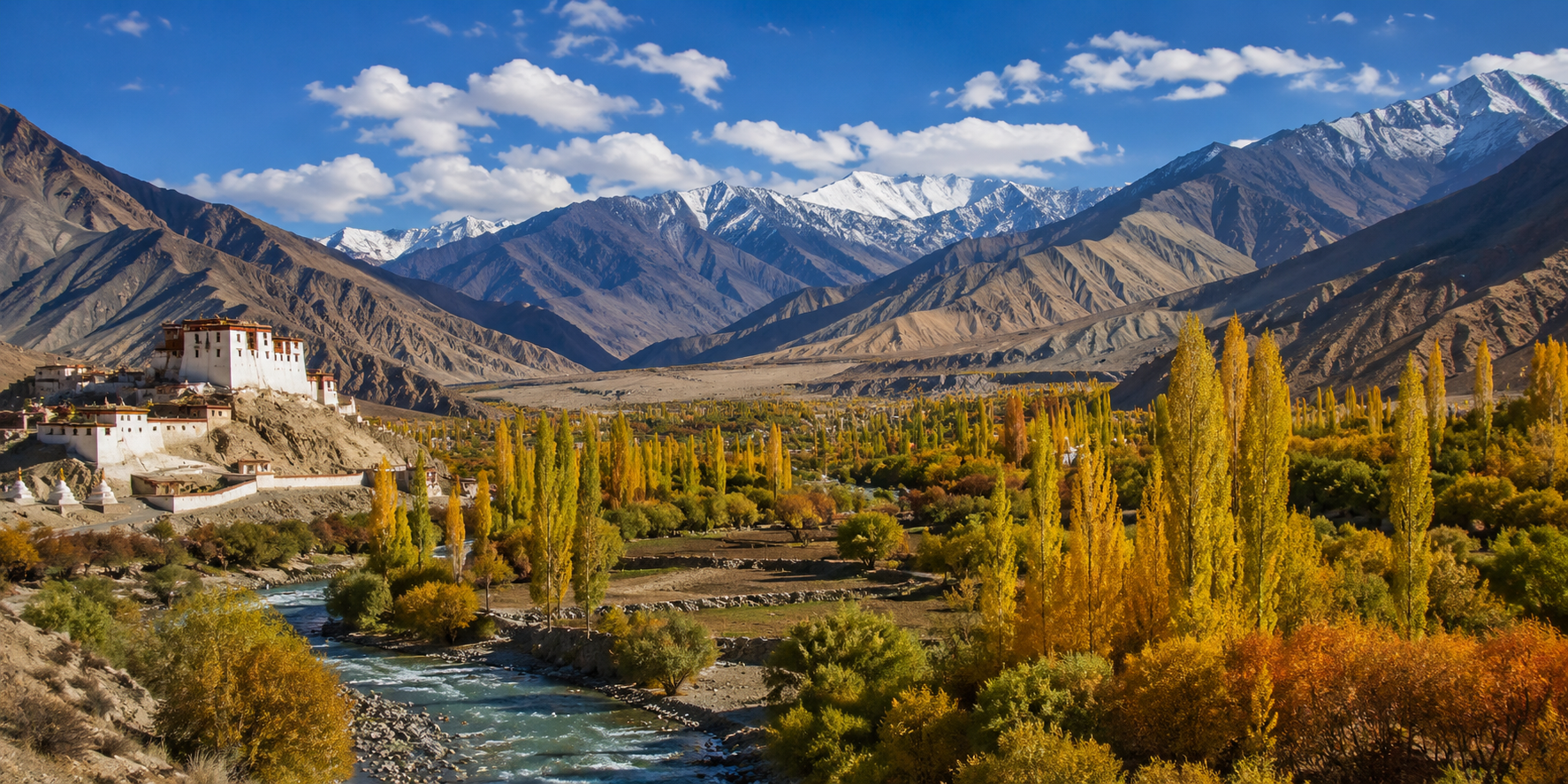
Ladakh in September: Why the Shoulder Season Is Ladakh’s Best-Kept Secret
July 22, 2026
What September Does to the Nubra Valley
July and August are when Nubra Valley is fullest. Every guesthouse confirmed weeks in advance. The Khardung La road running with jeep convoys from Leh. The Siachen-fed dunes busy by mid-morning.
Ladakh in September is when the valley exhales.
The tourist volume drops noticeably from the first week of the month. The properties that were turning people away in August have rooms. The monastery courtyards in the morning have monks going about their practice rather than navigating visitor traffic. The Nubra River, the orchards, the cold desert floor below the Karakoram, all of it is still there. Just quieter. Just more available.
The traveller who specifically times their arrival for September is making a deliberate choice, and it consistently pays off in ways that the August booking doesn’t.
The Weather in September: What Actually Changes
This is the specific question worth answering before anything else.
Weather in September in Nubra Valley runs daytime temperatures between 15 and 25 degrees Celsius on the valley floor, comfortable, clear, the specific quality of high-altitude autumn air that has had the summer dust settled out of it. The nights cool sharply, 5 to 8 degrees by late evening, cold enough to require proper bedding, cold enough to make the morning fire or the heated cottage room feel genuinely good.
The monsoon that affects the rest of India barely reaches Ladakh in its full form, the Trans-Himalayan rain shadow keeps the valley dry. September sits in the post-monsoon window: the atmosphere is cleaner than August, the skies are clearer, and the Karakoram above the valley is visible with a sharpness that the summer haze doesn’t always allow.
The Khardung La is reliably open through September. The first snowfall at the pass typically arrives in October. The weather in September in Nubra gives the traveller the full window without the winter risk.
The Karakoram in Autumn Light
September light in the Karakoram is the specific reason photographers with serious intent choose this month over any other.
The sun angle changes from August, lower, warmer in tone, the shadows longer on the mountain faces above the valley. The Karakoram peaks above Nubra catch this light differently from how they do in the flat brightness of July. The glaciers, the Siachen drainage feeding the Nubra River, are visible with more definition as the summer atmospheric haze clears.
The apricot trees, which blossomed in April and carried fruit through summer, are in their October-approaching state by late September, leaves turning, the fruit harvest completed, the orchards carrying the specific autumn character that the spring and summer versions don’t have. In the orchard properties in Tegar village, September mornings have a visual quality that the high season doesn’t produce.
For Ladakh in September, the photographic window, the clear atmosphere, the autumn light, the emptier landscapes, is the argument that no other month makes as strongly.
Nubra Valley in September: The Version Peak Season Doesn’t Offer
Ladakh in September in the Nubra belt is a specific experience.
- Samstanling Monastery in Sumur: 2.2 kilometres from the Tegar village properties, runs its practice without the visitor pressure that July and August bring. The morning hours at the monastery in September carry the specific quiet that the monastery is designed for.
- Panamik hot springs, 35 kilometres north: The geothermal water at the valley’s upper end, accessible on a clear September road, with the Karakoram above and the cold air around. The soaking experience with snow peaks visible above and autumn light on the surrounding rock is the specific Nubra Valley moment that peak season visitors miss because the springs are busier and the road is more crowded.
- The Nubra River itself in September: Running lower than the snowmelt peak of June and July, the banks accessible, the bird activity along the water at its most visible as the migratory season begins in the Shyok-Nubra corridor.
What to Do in the Nubra Belt in September
Nubra Valley in September has enough within the valley corridor to fill five days without covering the same ground twice.
- Diskit Monastery: 15 kilometres from Tegar, the 14th-century gompa above the valley with the Maitreya Buddha looking across the sand and river. September mornings at Diskit are the visit the August tourist wished they’d planned for.
- Diskit Buddha Statue: Adjacent to the monastery, the largest outdoor Buddha statue in Ladakh, with the valley spread below.
- Sumur village and Samstanling Monastery: The working monastery whose practice has continued here since the 19th century. The orchard walk approach in September, with the trees in late-season colour.
- Panamik hot springs: 35 kilometres north, the geothermal springs in the upper valley. Road accessible in September before the winter closes.
- Shyok River corridor: The river that runs along the valley’s eastern edge before joining the Nubra, with the bird activity that the September migration window brings. Kingfishers, raptors, waders working the water in the specific light that the season produces.
- Stargazing from the valley floor: The September sky above Nubra, with no monsoon moisture and the tourist season thinning, is the clean astronomical sky that the summer peak doesn’t always deliver. No light pollution. The Milky Way visible clearly. The specific pleasure of being at 3,000 metres with nothing between you and the Karakoram stars.
Lchang Nang Retreat
September reveals Nubra Valley at its most unhurried, and Lchang Nang Retreat is one of the few places that lets you experience it from within the landscape itself. Surrounded by orchards, framed by the Karakoram, and shaped by Ladakh’s traditions, it offers the kind of stay where the season becomes part of every moment, not just the itinerary.