Ladakh in October: What to Expect Before the Winter Arrives
September 11, 2026
There’s a particular week in October when Leh just empties out. The summer crowd has gone home, half the cafes have already pulled their shutters down for the season, and the poplar trees along the Indus have turned this deep gold that photographers wait all year for. It’s an odd, in-between month. Not quite the peak season everyone plans around, not yet the winter everyone avoids. If you’re trying to figure out whether October actually works for a Ladakh trip, here’s what you’re really signing up for.
What Ladakh Actually Feels Like in October
October is the month Ladakh quietly hands the valley back to itself. Tourist numbers fall off once the school holidays end, hotel rates drop with them, and the whole place slows down in a way it just doesn’t during June and July. The light shifts too. The sun sits lower, shadows stretch longer, and the willow and poplar trees along the river valleys turn from green to this deep yellow that lasts maybe two, three weeks before the leaves drop.
It’s a great month if what you want is space. It’s a trickier one if you need everything to run on a fixed schedule, since by mid-October some restaurants, guesthouses, and tour operators have already started shutting down for winter.
Weather and Temperatures, Week by Week
Leh’s long-term weather data puts October’s average around 16°C in the day and just above freezing at night, but that’s a citywide number and it hides a lot of movement across the month.
- First week of October is still nice. It’s usually midteen highs during the day and cold but not too bad at night. That’s your best bet for seeing the most consistent weather with the least risk as far as temperature and precipitation goes.
- In the second week it starts cooling off more. Nights are near freezing and there’s a chance for snow on the higher passes.
- During the back half of the month it’s very fickle. Highs could be in the single digits during the day with nights regularly below zero. There’s a very real chance for snow on the higher altitude roads.
One thing worth knowing: snow hits the high passes first and the valley floor much later. So even when Khardung La sees its first snow, Leh town itself could still be dry and mild for weeks after.
Which Roads Stay Open, and For How Long
This is usually what decides whether an October trip works.
- Khardung La, the pass linking Leh to Nubra Valley, generally holds up through October but gets more weather-dependent as the month wears on. Early snow can cause short closures while it’s cleared.
- The Srinagar-Leh highway tends to be more reliable than some of the higher passes, though Zoji La can see early snow that slows things down.
- Flights into Leh run all year, so if road access starts looking shaky, flying in and out is always there as a backup.
The general rule locals go by: plan for the first ten days if you want reliability, and build in flexibility if you’re travelling any later.
Why the Northern Nubra Side Gets Better in October
Nubra Valley’s most popular trips all follow the same worn path. By October, that path is noticeably less busy. However, those willing to push further north on the path to Panamik, Sasoma and Warshi on the old Silk Route, which carried pashmina wool and salt as part of the trade route between Central Asia and the plains, really sees what October has to offer.
This side of the valley never saw the crowds the main circuit did, so there’s less to lose once the season winds down. What you actually get:
- Fewer vehicles on a road that was already lightly used
- Clearer air once the tail end of the monsoon clears out
- The same golden poplar and willow colour you’d find closer to Leh, just with almost no one else around to share it with
It’s a quieter, more remote version of autumn in Ladakh, and October is one of the better months to attempt it, as long as the road stays clear.
The Siachen Glacier Angle
Further north, past Warshi, the road eventually leads toward the Siachen Glacier, the highest battlefield in the world. Civilian access to designated tourist facilities near the base camp has opened up gradually over the past few years, usually through an environmental fee rather than a full military permit, though this can shift depending on the security situation at any given time.
October gives you one of the narrower windows when this stretch is still reachable before winter restrictions tighten up. It’s not something to just wing, since the distances are long and the altitude is no joke, but for travellers who’ve already covered the standard Nubra route and want to go further, this is the direction worth looking at.
What to Pack
- A down jacket rated for sub-zero temperatures, not just a fleece
- Thermal base layers, for both day and night
- A windproof outer shell, since wind chill matters more than what the thermometer says
- Woollen socks and a proper hat, easy to forget and hard to manage without
- Sunscreen and sunglasses, since the daytime sun at this altitude is still strong even when the air is cold
Should You Go Early or Late October?
If you prefer more certainty, the first ten days of the month provide better weather and road conditions. But, if you are comfortable dealing with more unpredictability for a lot of open roads, dramatic early season snow, and really low hotel rates, then later in the month is better. In general, having flexibility in your plan is a good idea. Then you can check road conditions every day instead of trusting your plan, which you most likely made weeks ago.
Where to Stay
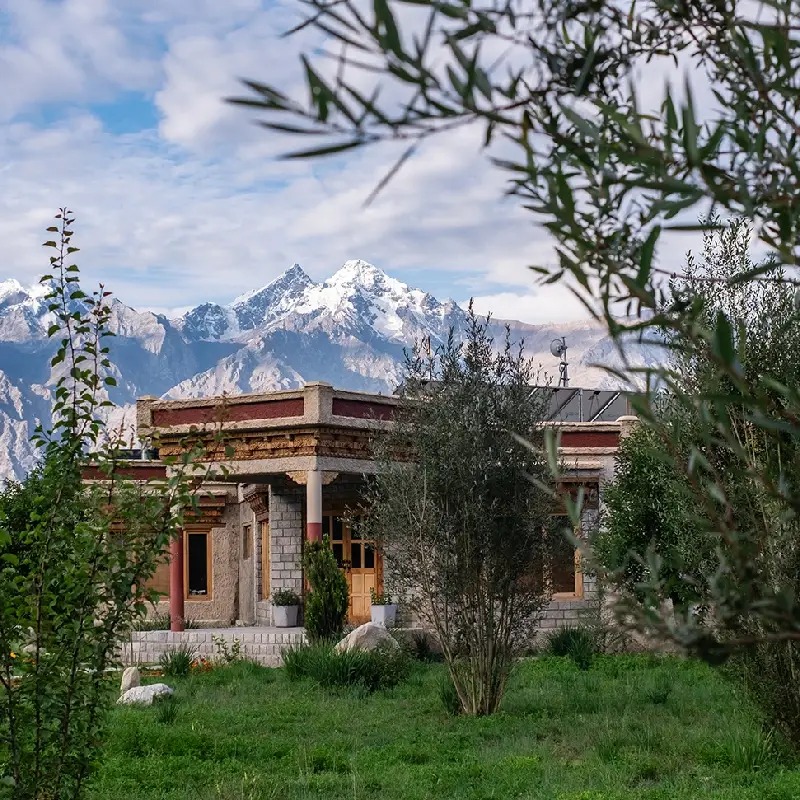
The Lchang Nang Retreat is ideally located on the banks of the Nubra river in Kyagar Village, a short walk from the road leading north to Panamik. This enables one to head off relatively early in the day on a visit to the less busy part of the Silk Route. The retreat is powered mainly by solar energy, reducing its environmental impact, and the rooms are made of mud, stone and poplar wood, a good insulator for the cold October nights. Breakfast timing is flexible enough to work around an early departure, and with October rates typically lower than peak summer, it’s worth checking current pricing against what you’d pay for something comparable closer to Leh.
FAQs
Is October a good time to visit Ladakh?
Yes, especially the first half. You get golden autumn colours, thinner crowds, and lower hotel rates, but weather gets less predictable as the month goes on, so it suits travellers who can stay flexible with their dates and plans.
Does it snow in Ladakh in October?
High passes like Khardung La can see early snowfall from the second week onward, though it’s usually light and temporary. Leh town and the valley floors generally stay snow-free longer. Heavier, steadier snowfall usually doesn’t arrive until late October or November.
Are Nubra Valley and Khardung La accessible in October?
Generally yes, especially early in the month. Access gets more weather-dependent as October goes on, with occasional short closures for snow clearance. Checking road status daily during your trip works better than assuming access based on general seasonal advice.
Is it safe to visit the Siachen Base Camp area in October?
Civilian access to designated facilities near the base camp is possible in stages, though it depends on current security clearance and weather, both of which can change without much warning. Best arranged through a local operator who can confirm real-time access rather than going off older information.
What should I pack for Ladakh in October?
Pack for both sun and freezing cold on the same day. A sub-zero rated down jacket, thermal layers, a windproof shell, warm socks, and sunscreen are all essentials, since daytime sun can feel strong even as night temperatures drop well below zero.