Ladakh Food Guide: Traditional Dishes Every Traveller Should Try
November 24, 2026
The traditional food of Ladakh is the kind you remember by the steam. A bowl of thukpa arrives, the window fogs up, and you all sit there for a minute without saying a word. That’s the entire review. All kitchens here – in Leh as well as in a village of Nubra – work with the same few ingredients – wheat and barley flour, peas, apricots, and a kettle of hot butter tea that just keeps getting refilled. The food’s for long, cold mornings and long, cold days outside and does that perfectly. If this is your first trip, let this be your cheat sheet of what Ladakhi food actually looks like on a plate, what to order first, and how to squeeze the best of it in between sightseeing.
Ladakhi Food Culture: Food items to try
1. Thukpa
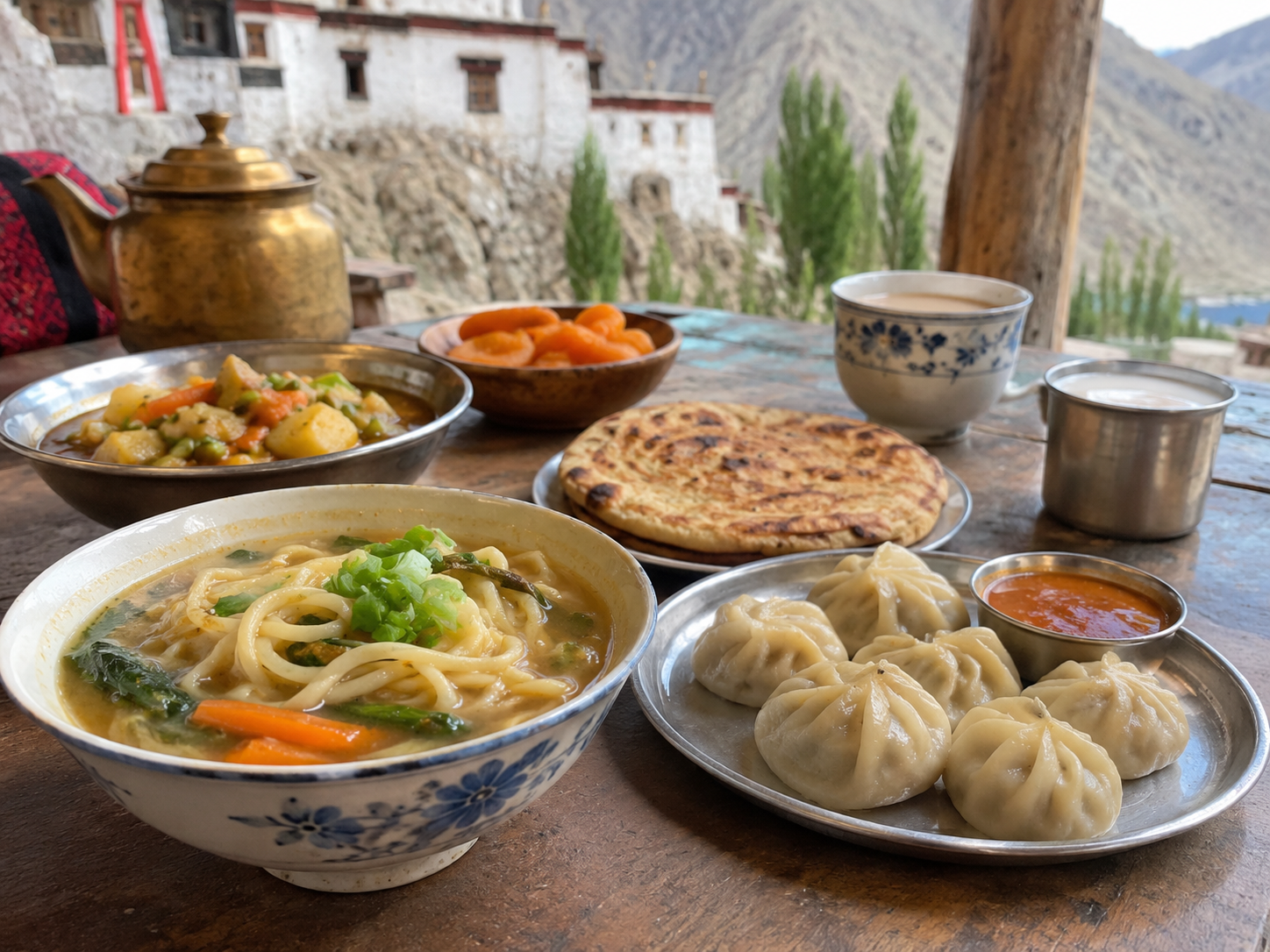
Noodle soup with vegetables or meat in a light, savoury broth. It’s the first thing most people order and the one they ask for again on day three.
2. Momos
Veg, paneer or minced meat dumplings, steamed, with a red chilli sauce or chutney on the side. Ladakhi momos are a little bit thicker and with a basic, juicy filling. They’re available at every eatery, from the million street stalls scattered all over to the narrow, homely ones.
3. Skyu
Ask a local about the famous dish of Ladakh and skyu usually comes up. Small pieces of wheat dough are shaped by hand and simmered into a thick stew with root vegetables, sometimes with meat. It takes time to make, which is exactly why it feels so special when someone serves it to you.
4. Chutagi
Think of bow-tie pasta in a warm vegetable soup, except the dough is rolled and shaped by hand. It’s mild and comforting, and a nice pick when you want something gentle after a day on the road.
5. Paba
A thick, dough-like dish made from roasted barley flour, often mixed with pea flour. It’s eaten with vegetables, butter or soup. Barley has fed Ladakh for generations, and paba shows you why.
6. Khambir
A round, hearty local bread, cooked on a griddle. This is the classic Ladakhi breakfast, usually with butter tea, apricot jam or a fresh omelette on the side.
7. Thenthuk
Flat noodles pulled by hand and dropped straight into hot broth. It’s a cousin of thukpa, with chewier noodles that a lot of travellers end up preferring.
8. Mokthuk
Momos served in a clear soup instead of on a plate. Two comfort foods in one bowl, and a good way to warm up after a morning at Hunder or Disket.
9. Apricots, in Every Form
Ladakh’s apricots show up fresh in summer, drying on rooftops in autumn, and later as jam, juice, oil and a sweet apricot soup. Nubra is also known for sea buckthorn, a bright orange berry that goes into juice and tea.
Traditional and Local Drinks in Ladakh
- Butter tea (gur gur chai): Tea, butter and salt, churned to a creamy consistency. Locals consume this all day long.
- Sweet milk tea (ngarmo chai): Sweeter and milkier, and a popular choice for almost anyone who likes regular chai.
- Chang: A light barley beverage with a low alcohol content, available for people to enjoy during festivals, weddings and reunions. That cup you just accepted from them means the host is welcoming you in.
- Sea buckthorn juice: Chillies, fresh and very Nubra.
A Simple Way to Eat Through Your Day
Food in Ladakh makes the most sense when you match it to the hour. Here is a rhythm that works for most travellers –
- Morning: Khambir with butter tea or apricot jam
- Midday: Momos or thenthuk, quick and filling before the next drive
- Afternoon: Sea buckthorn tea with a handful of dried apricots
- Evening: Thukpa, skyu or chutagi, ideally near a warm stove
Home-cooked food is the best of Ladakhi cuisine, so take an invite for a tea from a local family if offered. While some cafes/guesthouses in Leh and Nubra also include a few Ladakhi dishes on the menu apart from Indian and continental fare, you can try all of it for breakfast, lunch, and dinner. From Leh to Nubra Valley it’s about 120-140 km across Khardung La (17,582 ft), but pocket some dried apricots for snacks during the drive.
Hotel and resort in Nubra Valley – Lchang Nang Retreat
Lchang Nang Retreat – The House of Trees is where you go when you just want some peace and quiet. It’s simple, comfortable and rooted in Nubra’s local culture. The Kalon family owns it, and it sits on their own land in Kyagar village. You walk to your cottage along a small footpath. There are 17 of them, built in a traditional manner of mud, stone and poplar, each with its own sit-out and garden.
Solar-powered, plastic-free, with predominantly local cuisine, breakfast is available at any time so there’s no difficulty in hitting the monastery festival early; the travel desk is happy to arrange onward excursions. Samstanling Monastery (around 2 km away), Sumoor dunes (2-3 km) and Diskit Monastery (1 hour 15 mins away by road) are closer by.
Final words
You don’t need a long list to eat well here. Start with thukpa, add momos, order skyu if you spot it, and end the day with something made from apricots. The best Ladakh food is rarely the fanciest. It’s usually the dish someone has been cooking the same way for generations. Slow down, ask what’s on the stove, and let the traditional food of Ladakh become one of the reasons you remember the trip.
Find Lchang Nang Retreat—The House of Trees on Google Maps.
FAQs
- What is the famous dish of Ladakh?
Skyu and thukpa share that title for most locals. Skyu is a thick stew with small hand-shaped wheat pieces and root vegetables, cooked slowly in a family kitchen. Thukpa is the noodle soup you’ll spot on every menu. Momos come close behind, so most travellers end up trying all three in their first two days.
- What is the best vegetarian food in Ladakh?
Plenty. Vegetable thukpa, veg momos, chutagi, skyu made without meat, paba and khambir with butter or jam are all easy to find. Most cafes and guesthouses in Leh and Nubra happily make these with vegetables or paneer, so just mention your preference when you order and you’ll eat well every day.
- How spicy is food in Ladakh?
Mildly seasoned, mostly. Ladakhi dishes get their flavour from broth, barley and fresh ingredients rather than heavy masala. Chilli usually arrives on the side as a red chutney, so you decide how much goes in. That makes the food easy for kids and for anyone who likes a gentle, comforting meal.
- What do people eat for breakfast in Ladakh?
Khambir is the classic. It’s a thick, round local bread, served with butter tea, apricot jam or plain butter. Most places also offer eggs, porridge and fresh fruit alongside. It’s a warm, filling start, and it keeps you going through a full morning of monasteries, dunes or a drive over Khardung La.
- What is butter tea and should I try it?
Butter tea, or gur gur chai, is tea leaves, butter and salt churned until creamy. The name comes from the sound of the churn. It tastes closer to a light, savoury soup than regular chai. Start with a small cup. Plenty of travellers end up asking for a second one, especially on a crisp morning.