Changing Seasons in Ladakh: A Visual Journey Through April
April 18, 2026
Most people plan Ladakh in June. Some go in September. Almost nobody goes in April, which is precisely why the people who do come back describing it differently from everyone else.
Changing seasons in Ladakh don’t follow the logic of a hill station. There’s no gradual softening into spring, no slow warming that gives you a few comfortable weeks before summer hits. What happens instead is more abrupt, more dramatic, and, in Nubra Valley specifically, more beautiful than any other seasonal shift the region produces. One week the valley floor is brown and silent. The next, the apricot orchards are white and pink from end to end, the Karakoram is still full of snow behind them, and the air carries something cold and sweet that doesn’t exist in any other month.
April in Nubra Valley is that week. Sometimes two weeks. Then it’s over.
What April Actually Looks Like in Nubra Valley
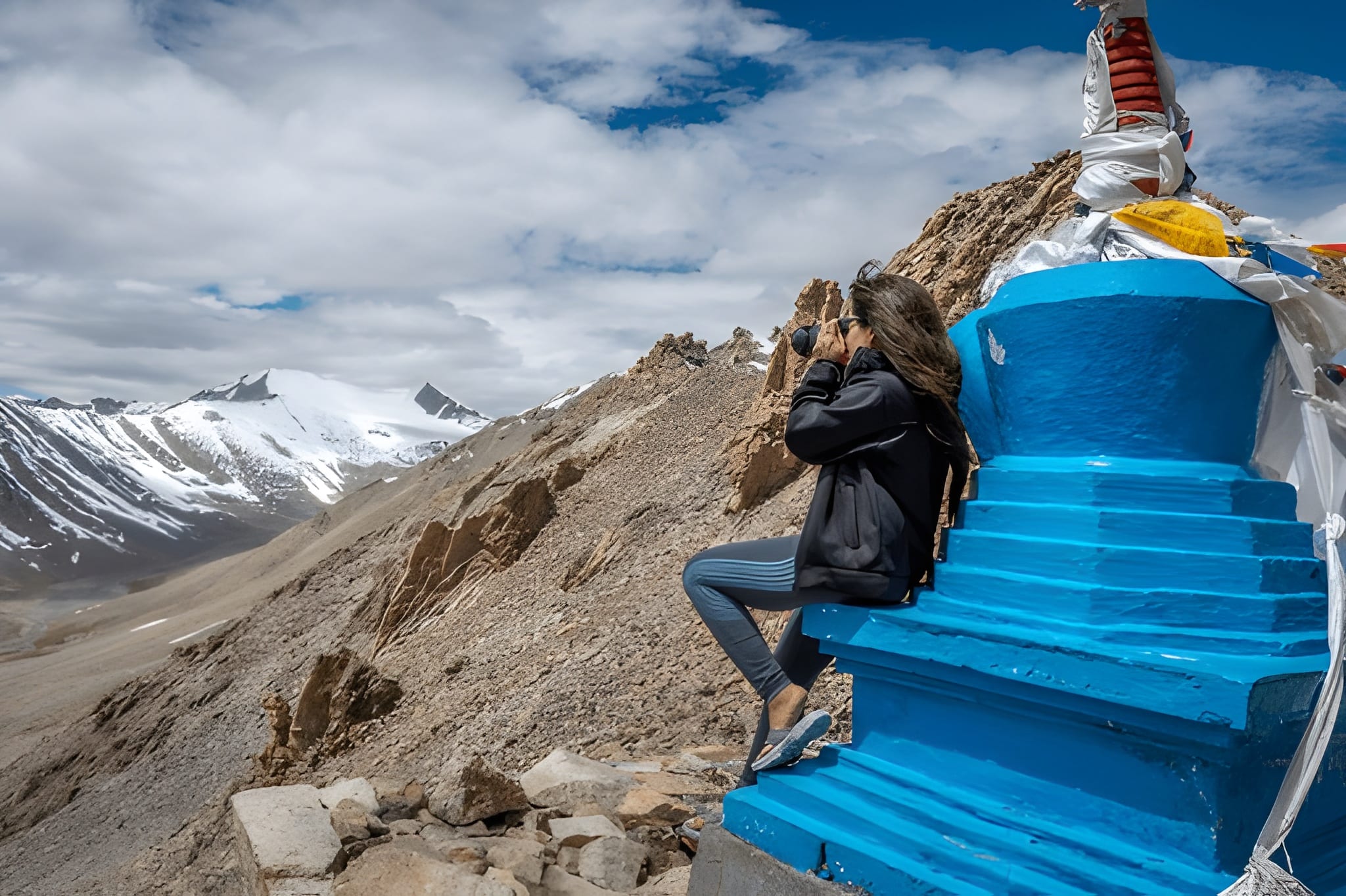
The Nubra Valley sits at roughly 3,000 metres, carved between the Karakoram and Ladakh ranges by the Shyok and Nubra rivers. In winter it closes almost entirely, Khardung La, the pass connecting it to Leh, becomes impassable for months. By late March, the pass reopens. April is the first full month the valley is accessible again, and it arrives carrying the most dramatic visual transition of the Ladakhi year.
The apricot trees bloom before the leaves come in. Leafless branches one morning and ,by the next, a quiet burst of white and pale pink. Their blossoms stand out against the brown gravel of the riverbed and the soft grey of an early high-altitude morning sky. The contrast does something the eye doesn’t expect at this altitude. It looks less like a natural event and more like a decision, the valley choosing, briefly, to be beautiful before the practical business of summer begins.
The Karakoram behind it is still white. Snow on every peak, on the high passes, on the faces above the treeline. The valley floor in flower, the mountains in snow, the air cold and clean and carrying that particular early-spring quality, this is the Nubra Valley image that no summer photographer captures, because summer doesn’t produce it. It only exists now, in this window, at this altitude.
The rivers are still running cold, snowmelt from passes that won’t fully thaw for another month. Nights drop fast and hard. Mornings hold onto the chill longer than you expect them to. Pack accordingly, and then don’t complain about it, the cold is part of what keeps the blossom sharp and the air clear and the valley empty of everyone who waited for summer.
The Wider Ladakh Picture: Seasonal Logic
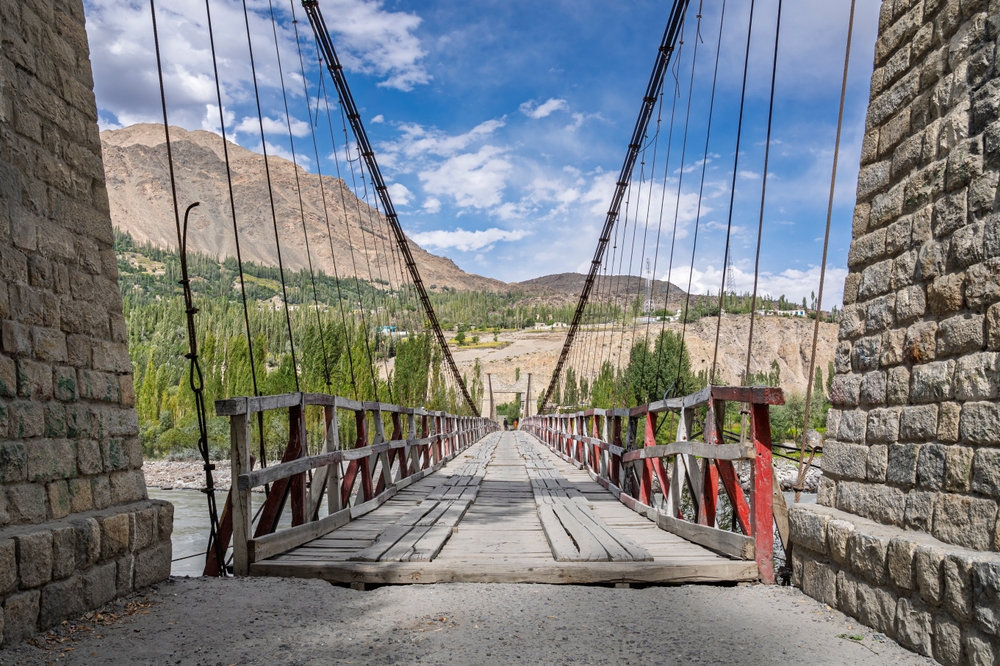
Changing seasons in Ladakh across the wider region follow their own distinct logic, worth understanding before booking.
- The Leh plateau opens reliably from mid-April, with road access via the Manali-Leh highway typically restoring in May,
- The Pangong and Tso Moriri lakes, popular in summer, carry ice into April and early May,
- The Zanskar Valley, accessible only for a few months in summer, is a different proposition entirely.
For anyone researching the best time to go to Leh Ladakh, the honest answer is, it depends entirely on what you’re looking for.
- Summer, June through August, gives you maximum accessibility, warm days, high passes open, and the turquoise lakes at their best. It also gives you the maximum number of other tourists, generator noise, and the particular atmosphere of a place being visited heavily.
- September trades some warmth for thinner crowds and the first hints of autumn colour on the poplars.
- April gives you something neither season offers, the valley before the summer starts. Diskit Monastery in April is actually a monastery you can enjoy. In August it’s a tourist site. That difference is felt, not just described.
Nubra in Spring: The Sounds Underneath the Scenery
The other thing about Nubra Valley in April that photographs don’t carry is the sound of it. The irrigation channels begin to open for the first season. The orchard work beginning. The distinct sounds of a community reawakening to outdoor life after months of snow and cold. The Bactrian camels at Hunder, double-humped and unhurried, back on the dunes. The morning call from Diskit Monastery drifting across the valley floor.
Spring in Nubra is agricultural as much as scenic. The orchards aren’t ornamental, they’re working trees, and the blossom is the beginning of the productive year. Watching the valley reopen after winter is watching something functional as much as beautiful. That combination is what makes the changing seasons in Ladakh worth building a trip around, rather than simply waiting for summer.
Lchang Nang Retreat — The House of Trees
Inside the Orchards, Not Outside Them
Lchang Nang Retreat sits in Teggar Village on the banks of the Nubra River, on what was the last stop of the ancient Silk Route, surrounded by a twenty-acre orchard of elm, apricot, and apple trees. In April, the property doesn’t overlook the blossom from a distance. The blossom is outside the cottage door.
Cottages designed in authentic Ladakhi style, using mud, stone, poplar and willow timber, featuring whitewashed walls, exposed beams, and black oxide flooring. Each 60 square metres, with king or twin beds on heated mattresses, private terrace, garden and mountain views. The Karakoram range visible from where you sit with your morning tea. Stylish slate bathrooms, handpicked rugs, contemporary furnishings that sit comfortably alongside the traditional architecture rather than competing with it.
The property runs on 95% solar energy. Drinking water comes filtered from glacial snowmelt. Building materials were sourced locally. Elimination of single-use plastics. The regenerative approach is in how the property operates daily, not in the language of the brochure.
What to Eat, Where to Eat It
The Chansa kitchen at Lchang Nang runs on Ladakhi culinary heritage, Chhutagi, Mok Mok dumplings, thukpa prepared by local women using seasonal organic produce.
The Karakoram Dining experience takes meals into the landscape, on the sand dunes, in a 400-year-old heritage home run by the Women’s Alliance of Teggar, or outdoors under the Siberian elms.
Picnic lunches in the meadows.An evening of barbecue and stargazing across the Sumur dunes. The food is a reason to stay, not a practical requirement of it.
What the Days Look Like
Guided walks through the flowering orchards with someone who knows the agricultural and cultural significance of each variety.
- Explore Teggar through village walks,
- Followed by a journey into Nubra’s heritage at the Old House Museum,
- Mountain biking on the Silk Route,
- Rafting on the Shyok River,
- Yoga at Samstanling Monastery or the holy lake,
- Experience mindfulness under the guidance of a monk,
- Ayurvedic-inspired spa treatments for holistic wellness,
- Visits to Diskit and Samstanling monasteries.
And in the evenings, beneath Nubra Valley’s clear spring sky, free from monsoon haze and untouched by peak tourist crowds, lies one of India’s finest stargazing experiences. The Milky Way stretches above blooming orchards, the chill sets in soon after sunset, and a warm bonfire glows under the open sky.
The best time to go to Leh Ladakh for this specific combination, blossom, silence, stars, and a valley that hasn’t yet filled with summer traffic, is April, from Lchang Nang, inside the orchards. Just four hours by road from Leh via Khardung La.
The window is two to three weeks. Then the petals fall, the leaves arrive, and Nubra becomes a different valley. A good one. But not this one.